Top 10 Treks in Nepal — and the Best Time to Do Each One
Nepal is not short on trails. But some routes earn a category of their own — not just for the views, but for what they demand and what they give back. Here are the ten treks that every serious mountain walker should know, each with the season that makes it worth doing.
1. Everest Base Camp (EBC)
Duration: 12–14 days | Max Elevation: 5,364m | Difficulty: Moderate–Strenuous
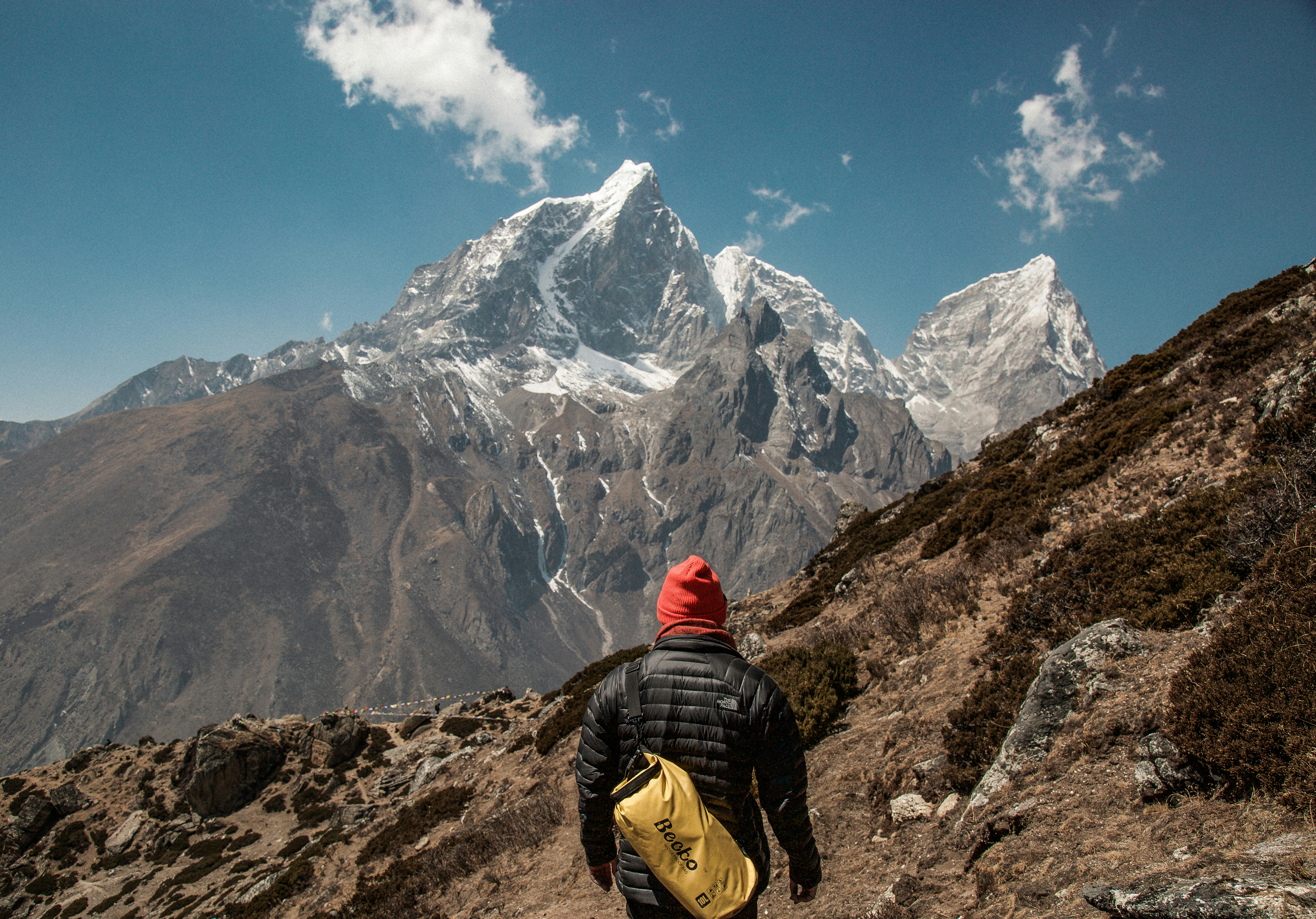
The most iconic trek on earth. You walk into the Khumbu, past Namche Bazaar and Tengboche Monastery, until the trail ends at the foot of the world's highest mountain. The approach is as powerful as the destination.
Best time: October–November (post-monsoon, crystal-clear skies) and late March–May (wildflowers, warmer nights). Avoid December–February unless you're cold-weather experienced.
2. Annapurna Circuit
Duration: 15–20 days | Max Elevation: 5,416m (Thorong La Pass) | Difficulty: Moderate–Strenuous
The circuit is one of the world's great long-distance walks — crossing from subtropical lowlands to high-altitude desert in a single journey. Thorong La Pass is the centrepiece, but Manang, Pisang, and the Mustang descent are just as memorable.
Best time: October–November for golden light and stable weather. March–April for spring blooms and fewer crowds than EBC.
3. Annapurna Base Camp (ABC)
Duration: 7–10 days | Max Elevation: 4,130m | Difficulty: Moderate
A shorter, less technical alternative to the circuit — but no less beautiful. The amphitheatre of peaks at Annapurna Sanctuary is one of Nepal's most breathtaking viewpoints. This is a strong first Himalayan trek.
Best time: March–May for rhododendron forests in full bloom. October–December for clear summit views.
4. Langtang Valley
Duration: 7–10 days | Max Elevation: 5,000m+ (optional Tserko Ri) | Difficulty: Moderate
Langtang is Nepal's closest major trek to Kathmandu — just three to four hours by road to the trailhead. The valley is wide, glacier-fed, and home to Tamang culture that feels genuinely unchanged. Kyanjin Gompa is one of the best monastery stays in the Himalayas.
Best time: March–May and October–December. The route dries quickly after monsoon and is often passable when others are not.
5. Gokyo Lakes
Duration: 12–15 days | Max Elevation: 5,360m (Gokyo Ri) | Difficulty: Moderate–Strenuous
Alternate — or combine — with EBC. The Gokyo Lakes are a series of turquoise glacial lakes above 4,700m, and the view from Gokyo Ri across four of the world's six highest peaks is arguably better than anything on the standard EBC route.
Best time: October–November. The Cho La Pass combination (linking Gokyo to EBC) requires stable conditions — go early in the season window.
6. Three Passes Trek
Duration: 18–22 days | Max Elevation: 5,545m (Kongma La) | Difficulty: Strenuous
For experienced trekkers who want everything the Khumbu has to offer in a single loop: Renjo La, Cho La, and Kongma La. This route links Gokyo, EBC, and the Chhukung Valley in a circuit that few complete but nobody forgets.
Best time: October–November only. All three passes demand dry, stable snow — this is not a spring route.
7. Upper Mustang
Duration: 12–15 days | Max Elevation: 3,840m (Lo Manthang) | Difficulty: Moderate
The former Kingdom of Mustang sits beyond the Annapurna rain shadow — an arid, wind-carved plateau with ancient cave cities, ochre cliffs, and the walled capital of Lo Manthang. It requires a restricted area permit ($500 for 10 days), which keeps the numbers low and the experience extraordinary.
Best time: May–October. Uniquely, Upper Mustang is one of the few Nepal treks you can do during monsoon season — the Himalayan rain shadow keeps it dry.
8. Manaslu Circuit
Duration: 14–18 days | Max Elevation: 5,160m (Larkya La Pass) | Difficulty: Strenuous
The Manaslu Circuit is what the Annapurna Circuit was thirty years ago — fewer trekkers, rawer trail, deeper culture. Larkya La Pass is a serious crossing, and the Nubri and Tsum Valley communities along the route have maintained Tibetan Buddhist traditions for centuries.
Best time: October–November. Larkya La is unreliable in spring and closed in winter.
9. Kanchenjunga Base Camp
Duration: 18–24 days | Max Elevation: 5,143m | Difficulty: Strenuous
Kanchenjunga — the world's third highest peak — sits in Nepal's remote far east, requiring a restricted area permit and a fly-in or multi-day drive to reach the trailhead. The reward is genuine wilderness: rhododendron forests, primary jungle, and almost no one else on the trail.
Best time: April–May (jungle and rhododendron in bloom) or October–November (clear skies). Not accessible in monsoon or winter.
10. Pikey Peak
Duration: 4–5 days | Max Elevation: 4,065m | Difficulty: Easy–Moderate
The underrated one. Pikey Peak is a short trek in the lower Solu-Khumbu region that offers a panorama of Everest, Makalu, Cho Oyu, and the Khumbu from a summit accessible in under a week. Sir Edmund Hillary called it his favourite viewpoint in Nepal. It remains almost unknown outside serious trekking circles.
Best time: October–November and March–April. Short enough to fit into any travel schedule.
The Two Trekking Seasons — A Simple Guide
Autumn (October–December): The prime window. Post-monsoon air is washed clean, visibility is exceptional, and high passes are reliably open. October is the busiest month — November trades some warmth for quieter trails. December is cold but dramatically clear.
Spring (March–May): The second season. Rhododendrons bloom below 4,000m, temperatures are warmer than autumn, and the light is softer. High passes open progressively through April. May brings pre-monsoon cloud build-up in the afternoons — start early.
Monsoon (June–September): Most high routes close. Leeches on lower trails. Upper Mustang is the notable exception — its rain shadow geography makes it the only major trek that runs through summer.
Winter (January–February): Cold, clear, and quiet. EBC, Langtang, and Pikey Peak remain doable for experienced winter trekkers. Most other high routes and passes are closed.
Trekkya is being built to help you plan the right trek for your experience level, timeframe, and season — with the kind of local knowledge that doesn't fit in a standard guidebook.